
A pipeline is a physical object, but the more valuable thing it produces is a template. Niger has spent decades as a producer without a port, and the standard prescription for that problem — pump crude, then depend on a neighbour to move it — has always left value on the table. This week the country tested a different answer. Nigerien oil reached the Sèmè export terminal on Benin’s Atlantic coast through a new roughly 2,000-kilometre cross-border pipeline, and with it arrived a strategic model other West African markets will now study.
The question for an Intellectual desk is not whether the barrels flow. It is whether the framework behind them transfers, and which of its assumptions would fail if copied into another country.
The Framework: Infrastructure as a substitute for geography
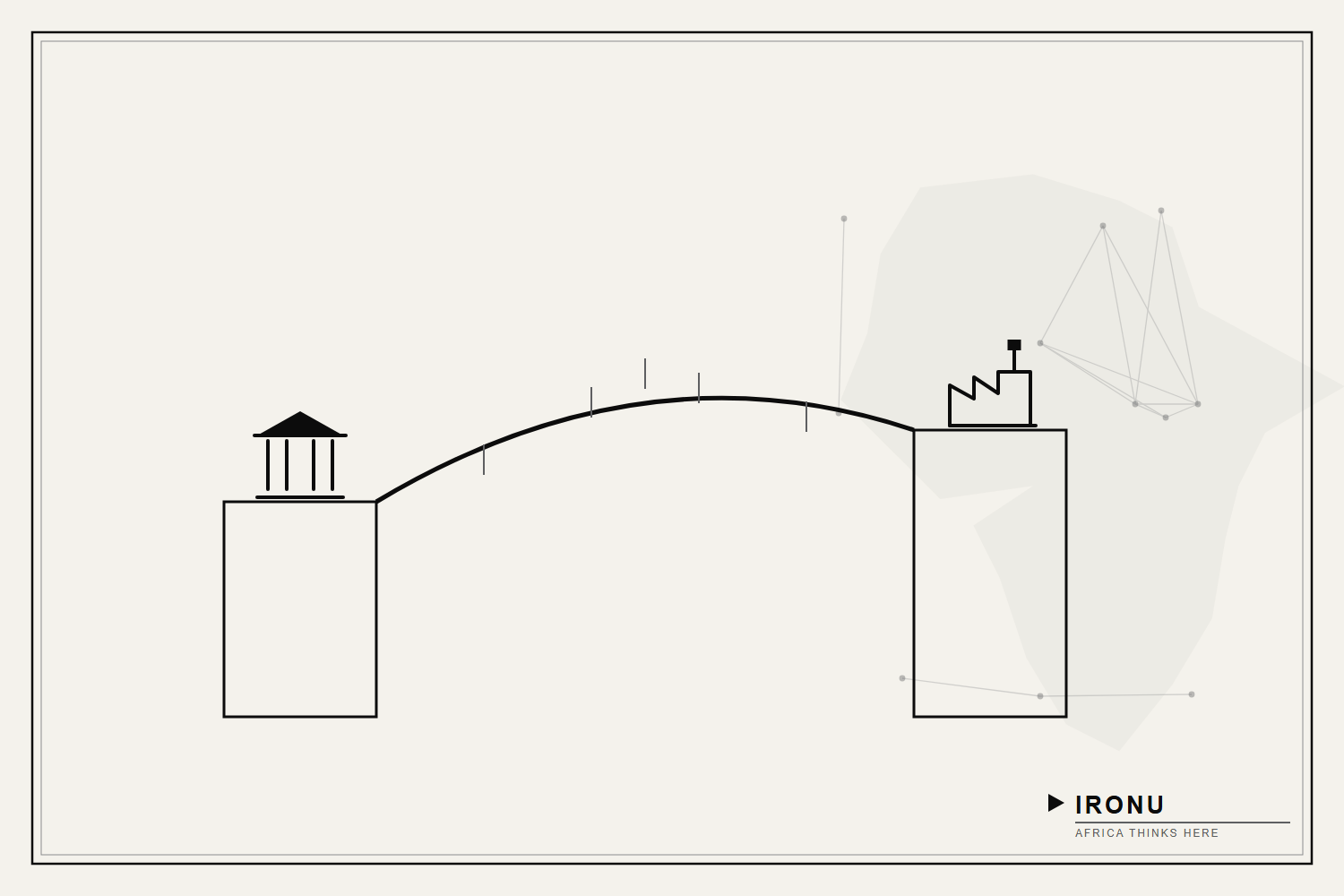
Strip the project to its logic and it reads as a wager that fixed infrastructure can buy what nature withheld. Niger cannot move its coastline closer, so it has spent capital to reach one — laying a dedicated line to Benin’s Sèmè terminal and converting a landlocked disadvantage into a single, defensible export route. The model rests on three pillars: a resource worth the capital, a willing coastal partner, and a financing structure patient enough to wait for throughput.
Each pillar is also a point of failure. Remove the resource base and the economics collapse. Remove the partner’s cooperation and 2,000 kilometres of pipe end at a closed gate. Remove patient capital and the debt outruns the revenue. The framework is elegant precisely because it is fragile — every part must hold.
Geography can be engineered around, but only where all three pillars stand.
The Second-Order Effects: What a corridor sets in motion
The interesting consequences are indirect. A working corridor changes the fiscal arithmetic of the Nigerien state, alters Benin’s role from neighbour to transit partner, and creates demand for a service economy — storage, inspection, security, logistics, finance — along the route. It also rewrites the strategic calculus of every other interior producer watching whether the model holds.
These are the effects that matter for transferability. A country weighing a similar project is not really buying a pipe; it is buying a set of second-order dependencies. The revenue is visible and attractive. The obligations — to a partner state, to lenders, to the security of a long fixed asset — are less visible and harder to unwind. Sound analysis prices both.
The pipe is the asset; the dependencies are the price.
The Transfer Test: Which assumptions travel, which do not
The honest reading is that the model is conditionally transferable. Its portable core is the idea that a landlocked producer can reach tidewater through dedicated infrastructure and a coastal partner. Its non-portable parts are everything specific to this case: the particular geology, the particular relationship between Niger and Benin, and the particular financing that made a corridor of this length viable.
An operator or policymaker elsewhere should treat the project as a reference architecture, not a blueprint. The corridor is one of West Africa’s largest new cross-border energy systems, which makes it a genuine case study for the region’s landlocked economies. But the assumptions that hold on this route — a cooperative neighbour, a bankable resource, a manageable security profile — cannot be assumed to hold on another.
Copy the logic, not the numbers: the numbers belong to this route alone.
The Operator Decision: Study, finance, or replicate
For an intelligent operator, the value here is analytical before it is commercial. The project supplies a tested framework for turning a landlocked resource into an Atlantic export, and a checklist of the conditions that framework requires. Financiers gain a live example of how such corridors are structured. Governments in interior markets gain a model to interrogate rather than admire.
What the development does, from this week, is change the operating assumptions for anyone who believed geography was destiny for a landlocked producer. It is not proof that every such project will succeed; it is proof that the model can be built. For the reader deciding whether to enter, finance or replicate, that distinction is the whole of the analysis.
A template is only as good as the conditions it needs, and those conditions do not travel for free.