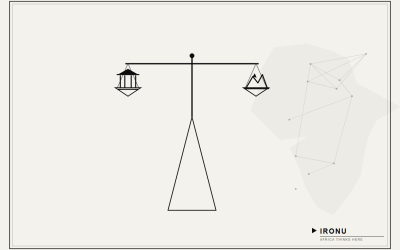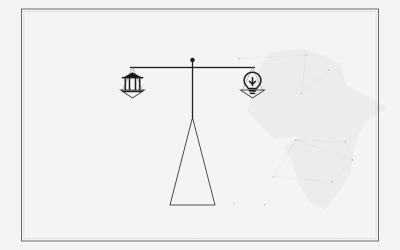

A law is also a hypothesis. Nigeria’s Startup Act, signed this week, advances a specific and testable claim: that a national government can accelerate a technology ecosystem by codifying it, labelling its firms, convening a council and writing incentives into statute. The interesting question is not only whether the model works in Lagos, but whether its underlying logic travels, and where it might break.
The Model: Codify, label, incentivise
The Act, signed into law on 19 October 2022, rests on three moves: a startup-labelling system that defines the firms in scope, a regulatory council that gives the sector a formal interlocutor, and tax and investment provisions that lower the cost of building. Stripped to its logic, it is an attempt to formalise a bottom-up phenomenon from the top down.
The strategic bet is that recognition precedes growth, that firms build faster when the state names them, protects them and reduces their frictions. It is a coherent bet, and one several jurisdictions have made in different forms.
A policy model is only as good as the assumption hidden inside it.
The Assumptions: What has to hold for it to work
Three assumptions carry the model. First, that labelling helps more than it gates, that the criteria admit genuine startups rather than becoming a barrier the connected clear and others cannot. Second, that the council acts as an enabler rather than a chokepoint. Third, that incentives are delivered as written, not diluted in administration.
Each assumption is an implementation risk, and each is where the model could fail in another West African market. A country with thinner institutional capacity, or a smaller pool of firms, might adopt the same statute and get a registry rather than an ecosystem. The framework is transferable; the conditions that make it work are not automatically so.
The statute is the easy part to copy; the institutions are the hard part to reproduce.
The Second-Order Effects: Beyond the sector itself
The model’s more durable consequences are indirect. A formal startup framework signals to capital that Nigeria treats the sector as permanent, which can shift how investors weigh the whole market. It also creates a template other ECOWAS and WAEMU governments can study, meaning the Act’s influence may exceed its jurisdiction, a national law functioning as a regional prototype under the AfCFTA’s push toward harmonised rules.
There is an intellectual-property and knowledge dimension too. A recognised sector is easier to build shared standards, skills pipelines and institutions around, the connective tissue that outlasts any single company. A sector the state has formally named can also negotiate as a bloc, on skills pipelines, on data rules, on the technical standards that decide whose product interoperates. As of 19 October 2022, these effects are anticipated, not observed, but they are where a framework earns its keep.
The strategic value of a law is often found outside the thing it regulates.
The Decision: Testing the model against your market
For an operator or policymaker weighing this model, the discipline is to separate the logic from the local conditions. The logic, formalise, recognise, incentivise, is sound and worth studying. The transfer requires honest questions: does your market have the institutions to administer a council fairly, the firm density to make a label meaningful, the fiscal room to fund incentives?
Nigeria has run the experiment in West Africa’s largest technology ecosystem, denominated in naira under the Central Bank of Nigeria, where scale gives the model its best chance. Smaller neighbours should borrow the framework with their eyes open, adapting for the assumptions that may not hold at home. Copied without that adaptation, the framework risks producing paperwork where an ecosystem was intended.
Study the model, name the assumptions, and adopt only the parts your own institutions can carry.