
Economics – Industry & Resources · Editorial
By Moakanyi Magazine · China-in-Africa · June 2026
If any single firm is meant to prove that China-Ethiopia manufacturing linkage works, it is Huajian. The shoemaker set up two production lines at the Eastern Industrial Zone with capacity for 2,000 pairs a day, exporting to US and European markets and employing around 3,000 people, mostly local, with vocational training that has included sending local technicians overseas. It is the textbook linkage story. It is also, on closer reading, the textbook account of why linkage is so hard to build, and of how long it takes.
Footwear chosen for the leather it could not get
Huajian came to Ethiopia partly because the country has livestock and leather, the obvious local input for a shoe industry. According to UNIDO, the firm was initially unable to source its supplies fully from the domestic market – quality fell short, and tax rules discouraged local suppliers, since preferential rates favoured exported goods over domestic sales. The very input that justified the investment was, at first, the input it had to import. The World Bank's Zeng paper records the same dynamic across Chinese zones in Africa: the Eastern zone could source no more than 30 per cent of its leather locally in the early years, a constraint that quietly undercut the whole rationale for siting a shoe industry in a livestock economy.
A firm can pick a country for its raw material and still spend years learning to buy it there.
Light manufacturing as a jobs engine
What Huajian does deliver is employment of exactly the kind Ethiopia's strategy targets: labour-intensive, export-facing, open to young workers – many of them women – entering the formal economy. Three thousand jobs at one tenant, structured vocational training and overseas technician placements are real human-capital gains, even if the higher-skilled design and management roles remain thin and often expatriate. This is light manufacturing doing what it is supposed to do – converting a young, low-cost workforce into exports and wages, and giving workers a first rung on an industrial ladder that barely existed a decade earlier. The wider context underlines why that matters: with industry contributing under 14 per cent of Ethiopian GDP and exports sliding through the mid-2010s, a single export-oriented shoemaker hiring at this scale carries weight out of proportion to its size, and serves as a visible advertisement for the country to other footwear and garment investors weighing East Africa.
Light manufacturing earns its place by hiring at scale, which Huajian plainly does.
The sourcing curve bends, slowly
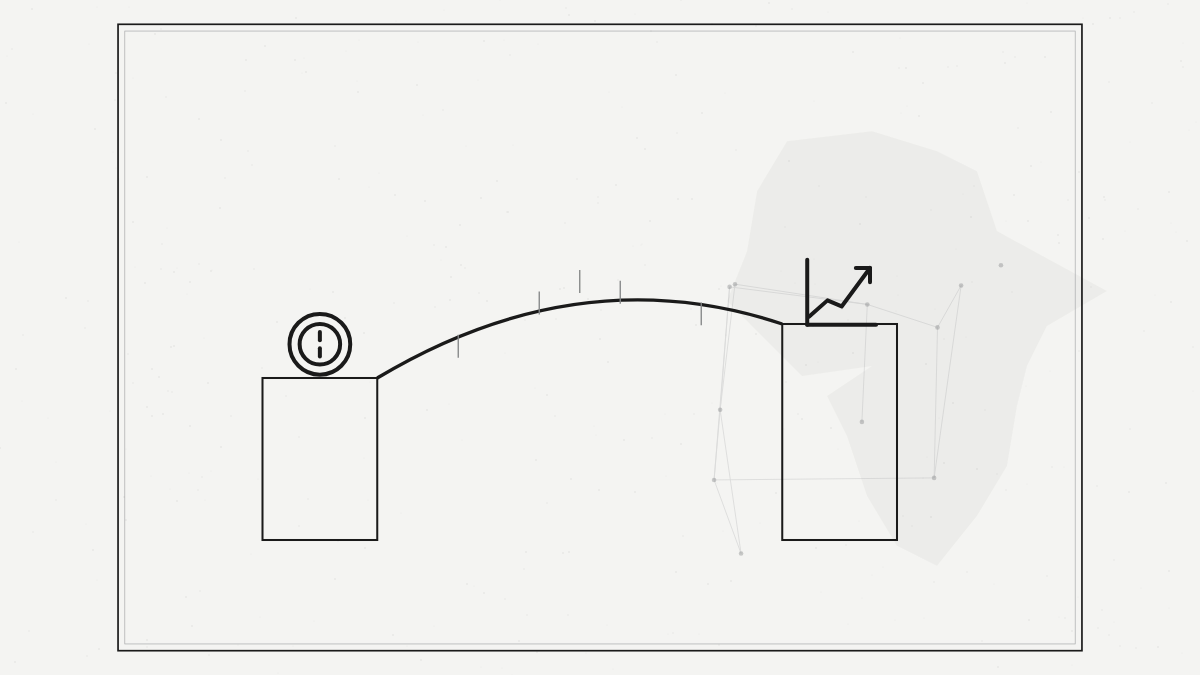
The encouraging coda is that the linkage gap is not permanent. UNIDO reports that Huajian's local-sourcing position improved markedly over the following years – the firm reached a point of sourcing around 80 per cent of its raw materials from the local market. That arc, from near-total import dependence to majority-local sourcing, is the single most useful data point in the whole linkage debate. It says the ecosystem can be built, but on the timescale of years and firm-by-firm, through patient supplier development rather than by policy decree. Helen Hai, the executive who ran Huajian's Ethiopian operation, became something of an evangelist for exactly that slow, hands-on model of moving manufacturing to Africa. The wider lesson for governments is that local content cannot be legislated into existence at the moment of entry; it has to be cultivated, supplier by supplier, while the anchor firm absorbs the cost and risk of teaching its vendors to meet export-grade standards.
Local sourcing is not switched on; it is grown, and Huajian's climb to 80 per cent shows the slope.
One firm, the whole argument
Huajian compresses the China-Ethiopia industrial story into one shoemaker: drawn by local inputs it could not initially use, delivering thousands of jobs and exports, and only gradually weaving itself into the domestic supply chain it was meant to anchor. For policymakers, the firm is both the proof and the warning. Linkage is achievable – the 80 per cent figure says so – but it is the patient outcome of years inside a difficult environment of forex shortages, thin logistics and a shallow supplier base, not a clause in an investment agreement. The model works; it just does not work quickly, and any government counting on a shoemaker to anchor an industry should budget for the years of patient sourcing the climb to 80 per cent actually took.
Sources: UNIDO – Industrial park development in Ethiopia (case study), World Bank – Global Experiences with Special Economic Zones (Zeng, 2015)