
Guinea-Bissau is small enough that a single well-designed programme can reshape its power economy, and fragile enough that most programmes struggle to survive contact with delivery. That tension, between a market where the model is easy to draw and hard to run, is what makes the newly financed solar scale-up worth studying not just as an energy project but as a framework. The interesting question for a strategist is not what the programme does in Bissau, but which parts of its logic transfer, and which assumptions would fail if lifted into another West African market.
The development itself is straightforward: development financing to expand solar generation, grid access and service quality, cutting reliance on expensive diesel. The second-order questions are where the intelligence lies.
The Policy Logic: Concessional Capital as a De-Risking Machine
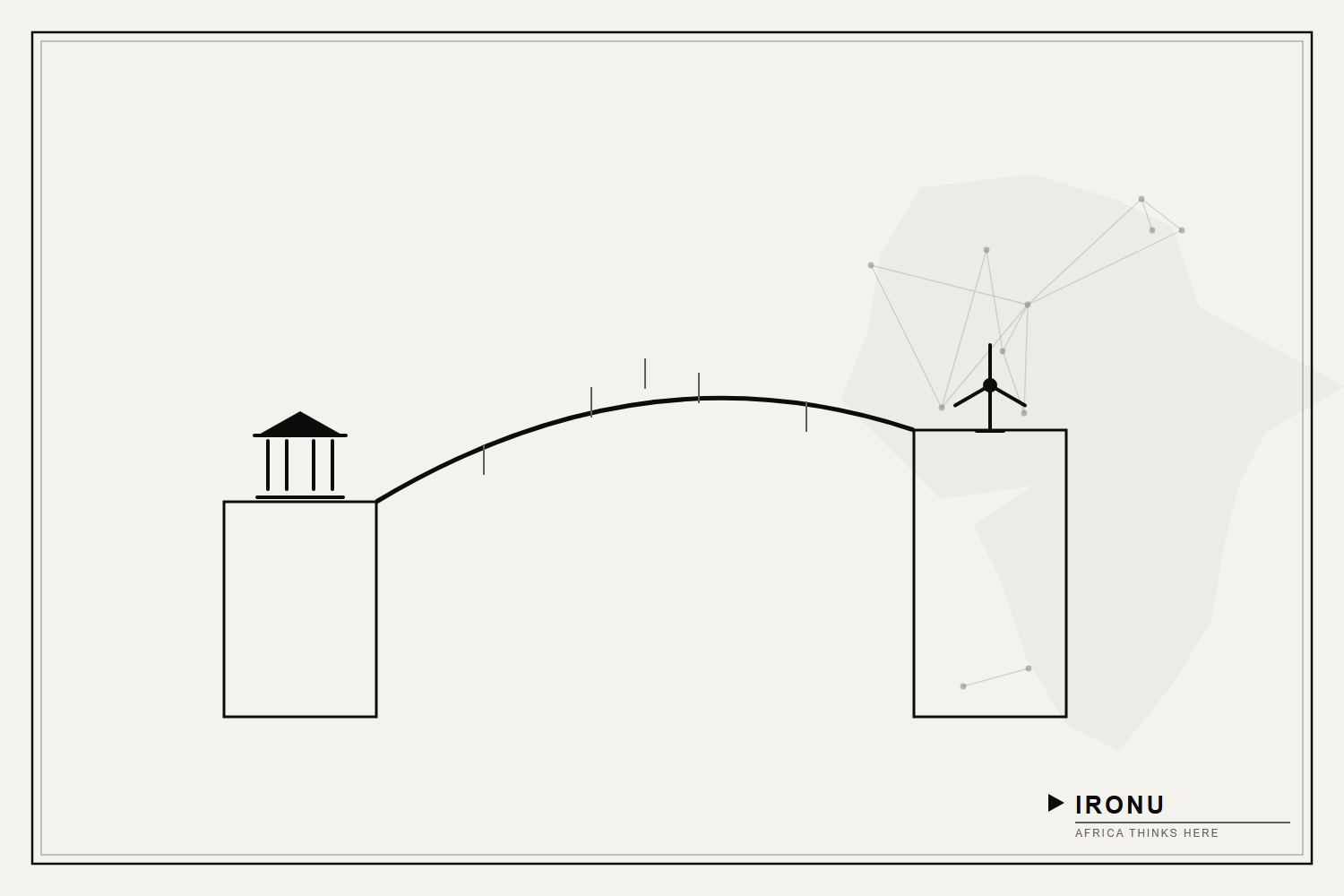
The underlying model in the World Bank-supported project is a familiar one applied to a hard case: use concessional capital to absorb the early risk that keeps private and commercial money away, and build access components that create a paying customer base over time. The logic is sound where the diesel baseline is expensive, because the cost gap gives the model its economic engine. Displace a costly incumbent and the savings fund the transition.
The framework’s strength is also its dependency. It works where the alternative is genuinely expensive and where an institution can be built to run collections and maintenance. Remove either condition and the case weakens. The model is not solar; it is arbitrage against expensive incumbent power.
De-risking works only where the risk being removed is the real one.
The Transferability Test: What Travels and What Does Not
Strip the programme to its assumptions and three stand out. First, that the diesel baseline is costly enough to make solar clearly cheaper, which holds in most small, import-dependent grids across the region. Second, that the currency is stable enough for long-tenor financing, which is unusually true in Guinea-Bissau because the CFA franc’s BCEAO-managed peg to the euro removes the devaluation risk that undermines power deals in floating-rate markets. Third, that a utility and local institutions can enforce payment and maintain assets, which is the weakest and least portable assumption.
So the model travels well to other WAEMU economies on the CFA franc, where the currency assumption holds automatically, and travels less comfortably to markets with volatile currencies or weaker payment institutions. An operator copying this template into a floating-rate economy inherits a currency risk that Guinea-Bissau does not carry, and one that can quietly break the returns.
The framework exports cleanly to the franc zone; elsewhere it needs a new engine.
The Second-Order Effects: Power as a Platform for Everything Downstream
The most valuable intelligence is not in the programme but in what it enables. Reliable, cheaper power is a platform input: it strengthens the commercial foundation for agribusiness, cold storage and digital services, each of which then generates its own investment and jobs. A strategist should map these downstream effects deliberately, because the return on an energy programme is realised in the sectors it unlocks, not in the megawatts themselves.
This is the discipline of thinking one order out. The households connected become digital consumers; the market towns powered become processing sites; the corridors served become industrial land. None of that is guaranteed, but all of it is foreseeable, and foreseeing it is where advantage sits. Guinea-Bissau’s programme is, in this reading, a small controlled experiment in what stable power does to a thin economy, and its lessons are readable across the region.
The energy project is the visible move; the platform it builds is the real one.
The Operator’s Decision
For an investor, adviser or institution reading this as of mid-June 2020, the decision is whether to treat Guinea-Bissau as a one-off or as a replicable template worth backing across the franc zone. The case for the template view is strong: the currency assumption that makes this bankable is shared across every WAEMU market, and the diesel-arbitrage logic is common. The case for caution is that the payment-and-maintenance assumption, the one that most often fails, is exactly the one that does not travel with the currency.
The measured conclusion is to extract the framework, not the headline. Back the model where the diesel baseline is high, the currency is stable and an institution can be built to collect and maintain; be sceptical where any of those three is absent. Guinea-Bissau has provided a clean test of the idea, and the operators who read it as a transferable framework, with clearly labelled failure points, will deploy capital across the region more intelligently than those who read it as one country’s power project.