
West Africa has no shortage of sunlight and no shortage of energy plans; what it has lacked is a repeatable way to turn one into the other. Many announced solar projects across the region have stalled between memorandum and megawatt. This week at Blitta, on Togo’s central plateau, one crossed the line. Togo inaugurated the Sheikh Mohamed Bin Zayed solar plant, a photovoltaic array of around 50 MWp that the African Development Bank calls West Africa’s largest. The interesting question is not the plant itself but the model behind it — and which of its assumptions travel to the next country and which quietly fail.
The Framework: A transferable template
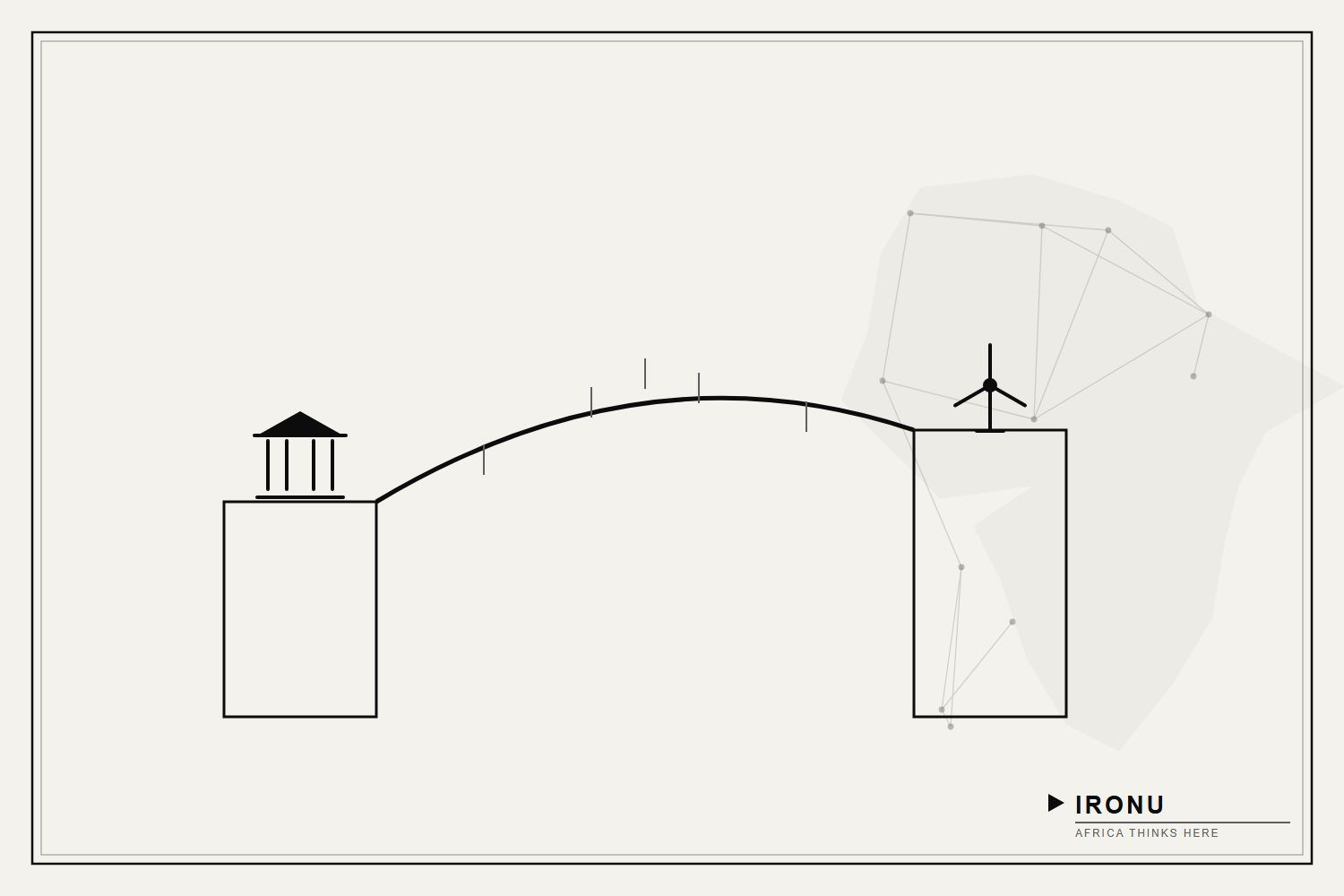
Strip Blitta to its logic and it is a clean, repeatable structure: a government sets an electrification target, a foreign developer brings equity and delivery capacity, development finance supplies long-tenor debt and guarantees, and a state utility signs a long-term purchase agreement. The Blitta project, led by AMEA Power with development-finance backing, is a working instance of that template rather than a bespoke one-off. Its value to the region is precisely its ordinariness. A model matters more when it is dull and copyable than when it is heroic and unique.
The Policy Logic: Why Togo, why now
Togo’s decision rests on a specific policy calculation. A small economy importing power and burning thermal fuel gains on several fronts at once: lower generation cost, reduced import exposure, a lower-carbon grid that attracts concessional capital, and progress against an electrification goal. Within WAEMU, where the CFA franc’s peg and BCEAO discipline constrain deficit spending, a structure that puts generation off the public balance sheet is doubly attractive. There is a further logic in timing. As global capital increasingly prices climate exposure, a lower-carbon grid is not only cheaper to run but easier to fund, and a small state that moves early secures development-finance attention before the queue of regional applicants lengthens. The policy insight is that the cheapest new power for a fuel-importing state may also be the one it does not have to finance directly.
The Failure Modes: What may not transfer
The assumptions worth stress-testing are the ones easy to overlook when a ribbon is cut. Off-taker creditworthiness varies sharply across the region; a PPA is only as good as the utility behind it. Land tenure that is straightforward on one plateau is contested on another. Grid capacity to absorb variable solar differs by country, and a weak network can strand generation. And a dollar-linked tariff sits comfortably in a stable CFA zone but strains in economies with thinner reserves. Even within WAEMU, where the currency and central bank are shared, these variables diverge country by country, which is why a model proven in Togo cannot be assumed to drop cleanly into Niger, Benin or Guinea-Bissau. The template is real, but each new market re-prices its own risk.
The Decision: What a strategist should extract
For an operator, investor or policymaker reading Blitta as a model rather than a monument, the second-order effects are the payoff. The intellectual asset here is a de-risking recipe that other WAEMU states can adopt with modest adaptation — and that developers will now shop across borders. The move is to identify which neighbouring market has the two scarce ingredients Togo assembled: a bankable off-taker and clean, permitted land near transmission. Where both exist, the model likely replicates; where either is missing, the ribbon-cutting is further away than it looks. The deeper implication is that West Africa’s solar build-out will not spread evenly by sunlight, which is abundant almost everywhere, but by institutional readiness, which is not. The scarce input is bankability, not irradiation. The plant is one array; the exportable thing is the method that built it.